

The first days of a puppy’s life are a delicate period. Newborn puppies cannot regulate their body temperature effectively, have very limited energy reserves, and depend almost entirely on their mother for warmth, nutrition and stimulation.
For most healthy litters, the mother does most of the work. The breeder’s role is to provide a clean, warm and quiet environment, monitor each puppy closely and recognize early signs that something may not be right.
During these first weeks, small changes can matter — which is why regular observation and veterinary support are so important.

1 Wаrmth Comes First
Newborn puppies cannot regulate their body temperature effectively and are highly vulnerable to chilling. During the first week, the environment around the puppies generally needs to be kept at approximately 29–32°C (84–89°F). The temperature can then be gradually reduced as the puppies mature.
The mother’s body heat and the puppies’ ability to huddle together also help maintain warmth. External heat should always be used carefully, as overheating and burns are possible, particularly with heating pads.
A warm puppy that nurses normally and settles peacefully after feeding is generally showing that its environment is comfortable. A cold, weak or unusually restless puppy requires prompt attention.
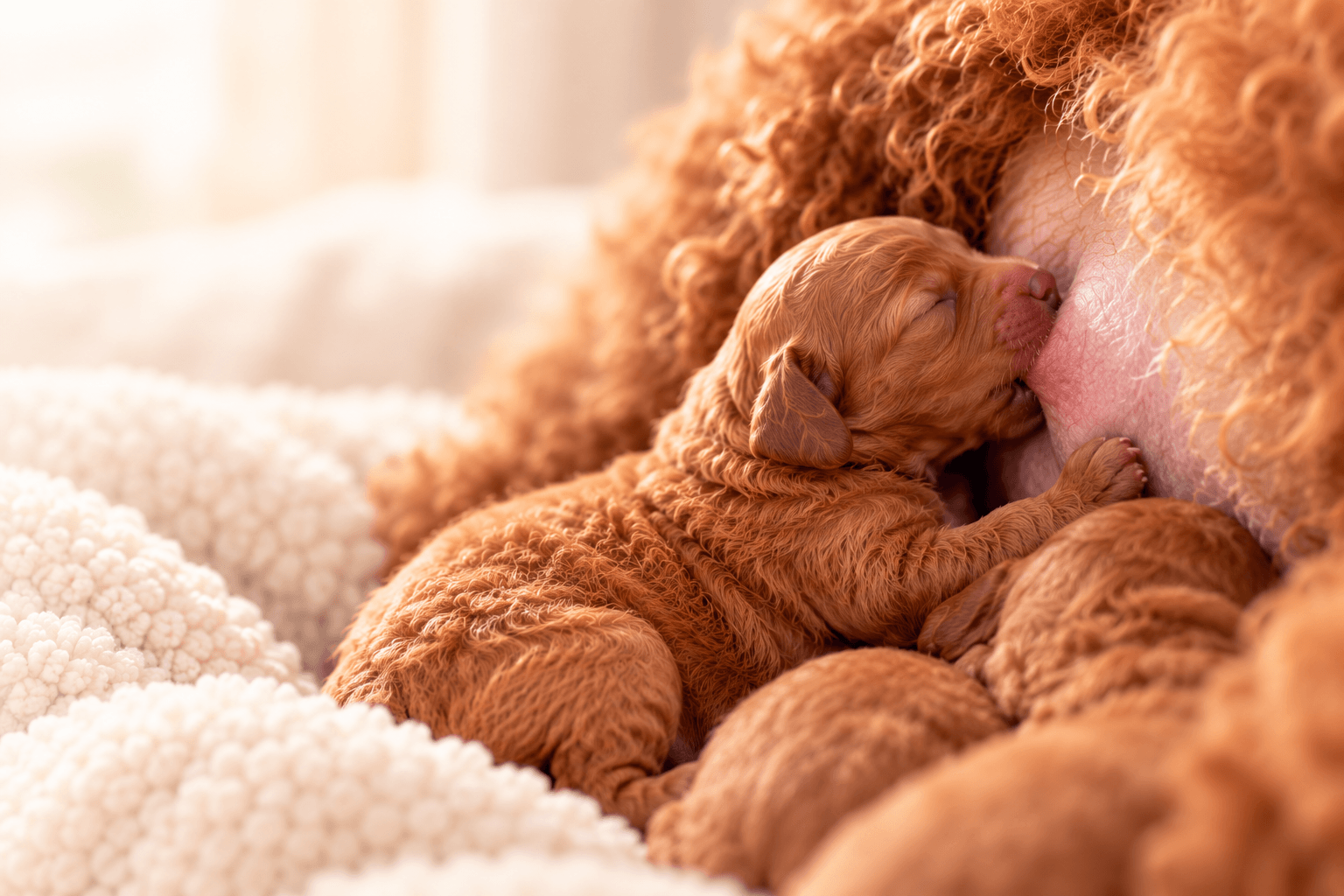
2 The First Milk Is Very Imortant
The mother’s first milk, called colostrum, is especially important during the first hours of life.
Colostrum contains antibodies and other important components that help support the newborn puppy’s developing immune protection. Puppies should begin nursing as soon as possible after birth, provided they are warm and stable.
The ability of the intestine to absorb maternal antibodies decreases rapidly during the first day of life, making early access to colostrum particularly important.
If a puppy cannot nurse or there are difficulties with feeding, veterinary guidance is important. Supplementation may sometimes be necessary, but feeding a weak or chilled puppy should never be improvised.
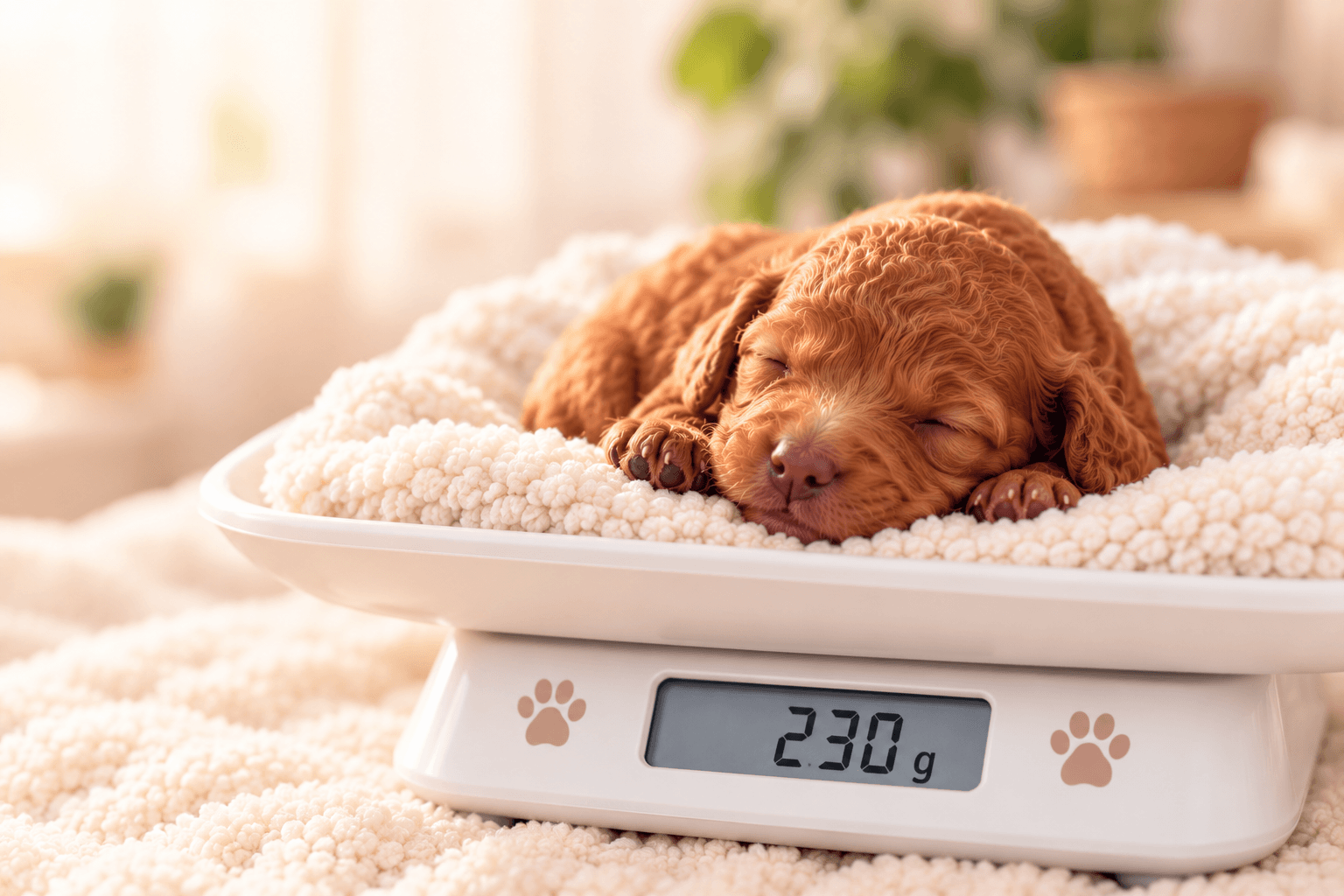
3 Every Puppy Should Be Monitored
Even when the mother appears to be doing everything perfectly, each puppy should be monitored individually.
A newborn puppy should be weighed accurately after birth and then weighed regularly. During the first week, daily weighing — and, when appropriate, twice-daily weighing — can help identify problems early.
A small amount of weight loss during the first 24 hours can occur, but after that puppies should show consistent weight gain. Healthy puppies commonly gain around 5–10% of their body weight per day.
Failure to gain weight, continued weight loss, weakness, poor suckling or persistent crying should never be ignored. These signs may indicate inadequate milk intake, hypothermia, infection or another neonatal problem.

4 They Sleep… A Lot
Newborn puppies spend most of their time sleeping or nursing.
During the first two weeks, a healthy puppy is generally quiet and spends the majority of its time either feeding or sleeping. They do not need toys, active play or stimulation in the way older puppies do.
Rest is an essential part of early development. Puppies should remain close to their mother and littermates in a calm, warm and clean environment.
Persistent crying, restlessness or difficulty settling can be a sign that something is wrong — particularly if the puppy is also cold, weak or not gaining weight.
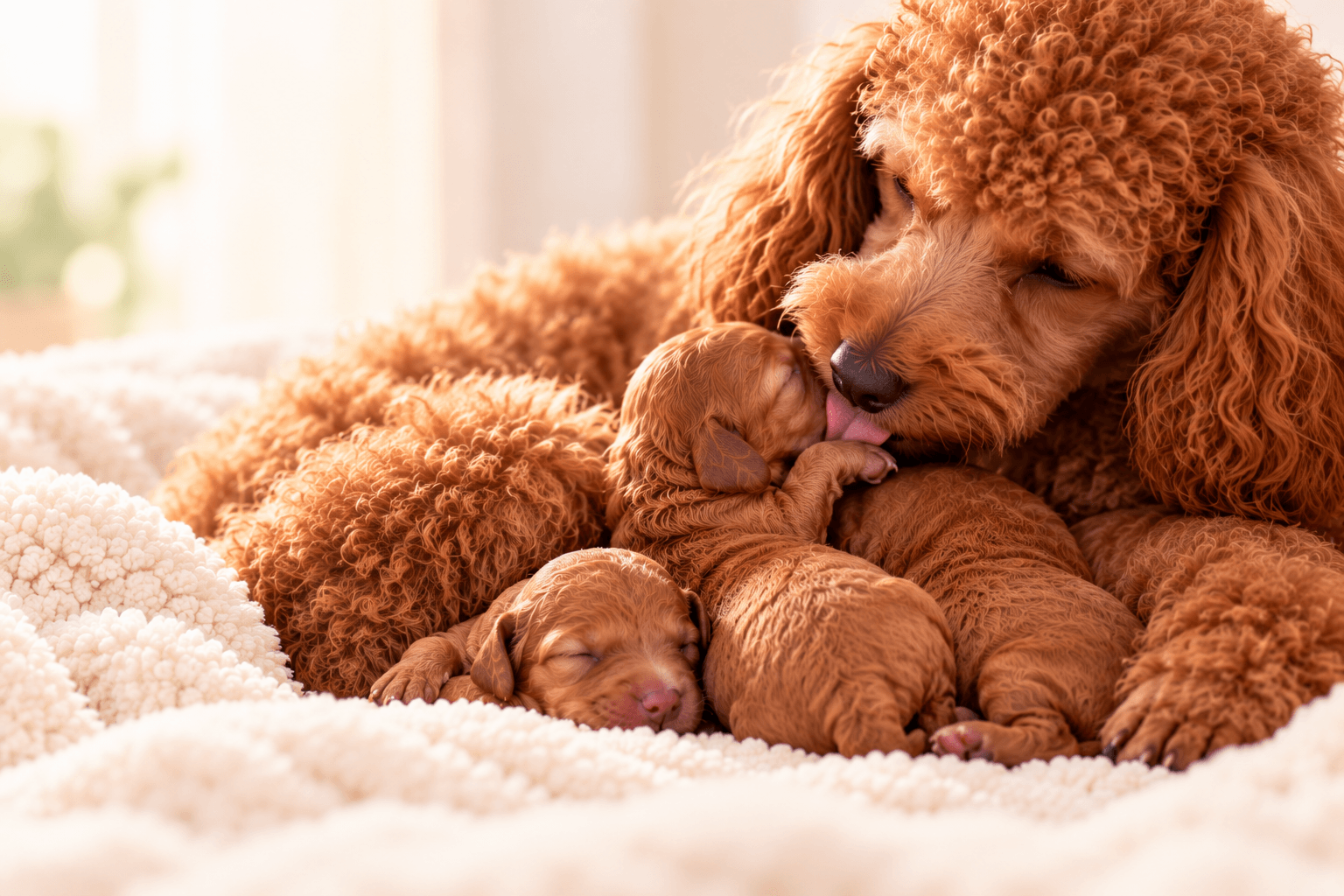
5 Mom Does Most Of The Work
For the first few weeks, the mother provides most of what her puppies need. She keeps them warm, nurses them, cleans them and normally stimulates them to urinate and defecate. Her presence also provides comfort and helps the puppies remain settled.
In most healthy litters, the breeder should support the mother rather than constantly interfere with her care. However, the mother should also be monitored daily. Her appetite, milk production, mammary glands, behavior and postpartum discharge should be observed, as problems affecting the mother can quickly affect the entire litter.
A quiet, familiar environment is especially important for a first-time mother, as stress can interfere with maternal behavior and nursing.

6 The First Days Are All About Growing
The first days and weeks are not about training or active play. They are about growth and establishing the foundations for healthy development.
Newborn puppies need warmth, frequent nursing, adequate nutrition, sleep and a clean environment. Their weight and overall condition should improve steadily as they grow.
As their nervous system and senses develop, their needs will gradually change. Eyes usually begin to open during the second week, and puppies become increasingly mobile and responsive as they approach three weeks of age.
The most important thing during this early period is simple: observe closely, keep conditions stable and act quickly if something seems unusual.
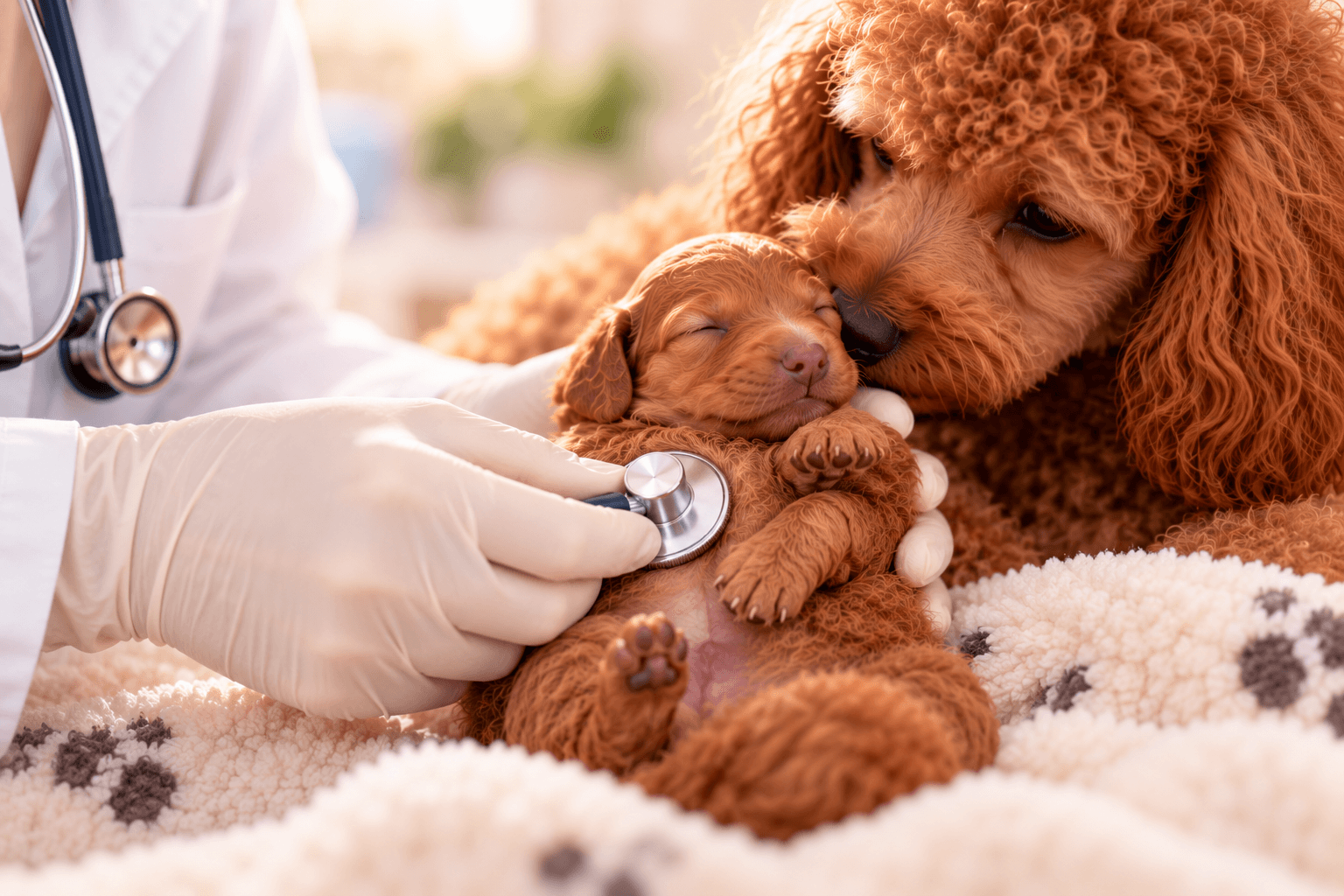
7 When Should You Contact A Veterinarian?
Newborn puppies can deteriorate quickly, so early veterinary assessment is important when something does not look right.
Contact your veterinarian promptly if a puppy: • repeatedly refuses to nurse or has a weak suckling reflex; • is cold, weak, unusually quiet or difficult to wake; • cries persistently or seems restless despite being warm and fed; • fails to gain weight or continues to lose weight after the first 24 hours; • has difficulty breathing; • develops diarrhea, vomiting or other concerning signs; • cannot nurse effectively or becomes separated from the mother.
A weak newborn puppy should not simply be watched for an extended period. Neonatal problems can progress rapidly, and early intervention can make a significant difference.

Puppy Care
Puppy Development: From Birth to Six Weeks
How does a puppy change during its first six weeks? Learn how the senses, movement, behavior and early social skills develop week by week.
Breeding & Education
Your Dog Is Pregnant… Now What?
Learn what to expect during pregnancy, how your dog’s needs change and how to prepare for a safe whelping.
Life With a Poodle
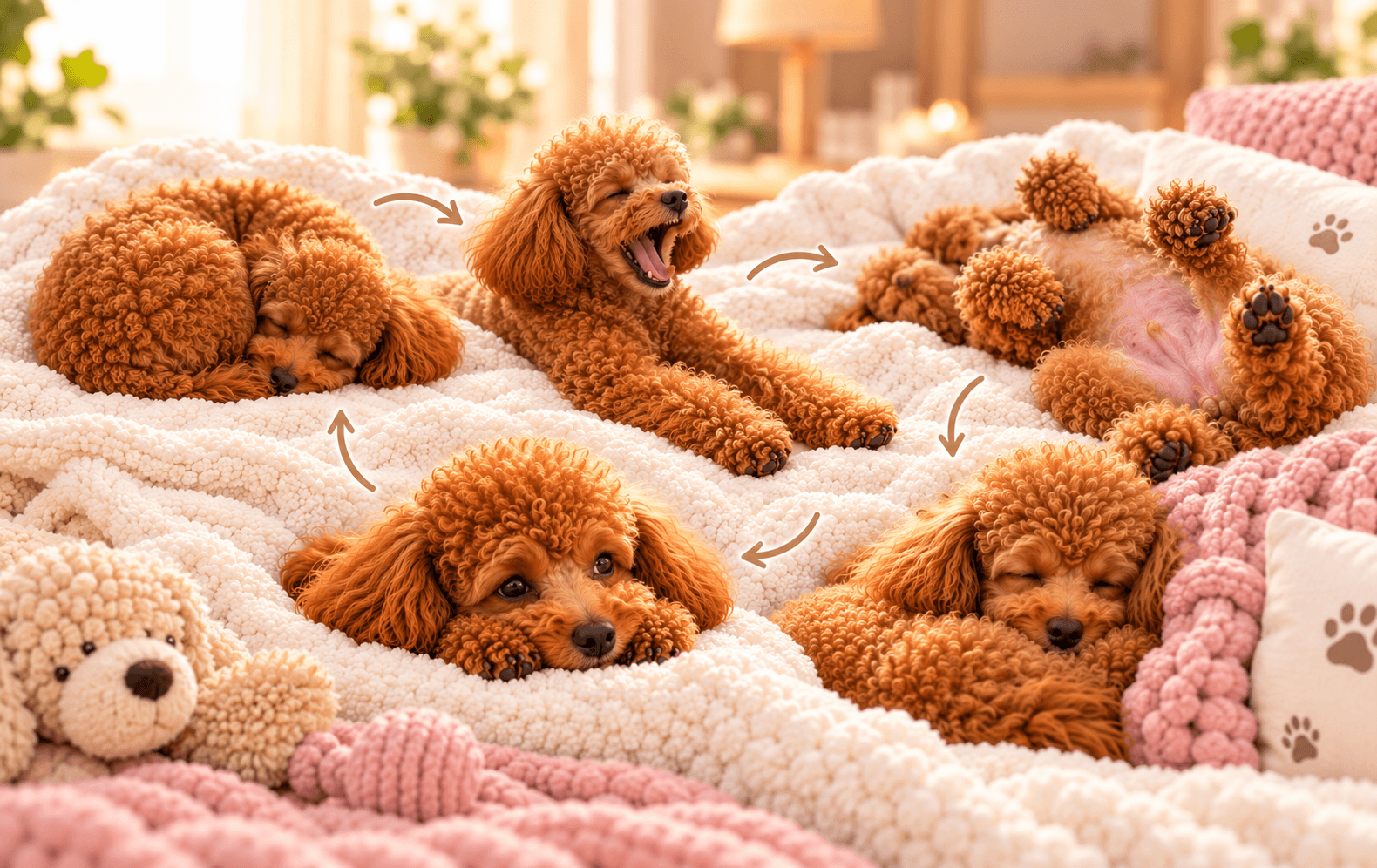
What Your Poodle's Sleeping Position Says About Them
From curling into a tiny donut to sleeping on their back, your Poodle's favorite sleeping position can offer little clues about comfort, security, trust, and relaxation.