

Pregnancy is one of the most important periods in a female dog’s life. Although most pregnant dogs progress without major complications, appropriate nutrition, veterinary monitoring and good preparation can help support the health of both the mother and her puppies.
Canine pregnancy averages around 63 days when timed from ovulation, but the breeding date alone cannot always predict the exact whelping date. For this reason, pregnancy monitoring and preparation for delivery are best planned together with your veterinarian.

1 She May Sleep More
During pregnancy, some dogs become calmer, less interested in strenuous activity and spend more time resting.
Behavioral changes can be subtle and vary from one dog to another. Sleeping more or becoming quieter is not enough to confirm pregnancy on its own.
Normal, gentle activity does not usually need to be stopped simply because a dog is pregnant. As pregnancy progresses, activity should naturally be adapted to her condition, while strenuous exercise and situations that could cause injury should be avoided.

2 Her Behavior May Change
Hormonal changes during pregnancy can affect a dog’s behavior. Some dogs become more affectionate and seek additional contact, while others become quieter and prefer more personal space.
She may also spend more time resting or begin looking for quieter places.
It is important to remember that these signs are not specific to pregnancy. Similar changes can occur with pseudopregnancy, so pregnancy cannot be reliably confirmed by behavior alone.

3 Her Appetite and Nutritional Needs Can Change
Changes in appetite can occur during pregnancy. Some dogs may eat less or experience mild nausea early on, while their energy requirements increase as the puppies grow.
The mother should receive a complete and balanced diet appropriate for pregnancy and growth. Simply increasing the amount of food from the beginning of pregnancy is not recommended.
Fetal growth increases substantially during the final third of pregnancy, when the mother’s energy needs also rise. Because there is less room in the abdomen, several smaller meals may be easier to manage than one or two large meals.
Important: calcium supplements should not be given during pregnancy without veterinary guidance. Inappropriate supplementation can create problems rather than prevent them.

4 Her Body Starts to Tell the Story
As pregnancy progresses, several physical changes may become noticeable:
Weight gain – particularly as the puppies grow. A growing abdomen – more obvious during the later stages. Changes in the mammary glands – which may become more noticeable as delivery approaches. Changes in body shape – the abdomen may become rounder and more prominent.
However, none of these signs confirms pregnancy on its own. Abdominal enlargement, mammary development and behavioral changes can also occur with pseudopregnancy.
A true pregnancy should therefore be confirmed by a veterinarian using appropriate diagnostic methods.
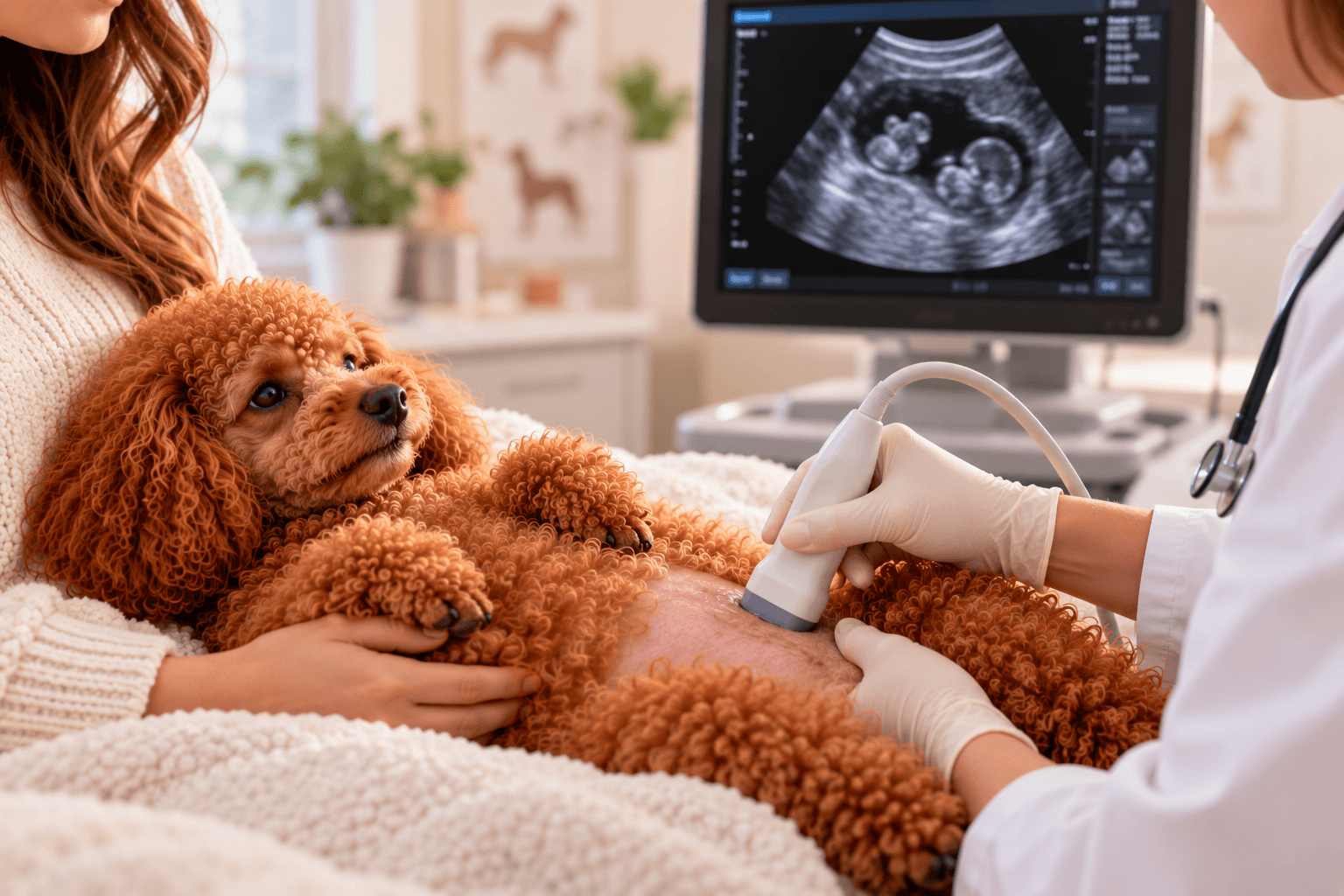
5 How Can You Know for Sure?
The most reliable way to confirm pregnancy is through veterinary diagnostics.
Ultrasound – pregnancy can generally be detected from around day 25, and ultrasound is especially useful for assessing fetal viability and confirming that the pregnancy is progressing.
Relaxin blood test – the pregnancy-specific hormone relaxin can usually be detected in pregnant dogs from around 22–27 days after fertilization.
X-ray – fetal skeletons become visible at approximately 42–45 days. Later radiographs, particularly after day 55, are the most useful method for estimating litter size.
The timing and choice of diagnostic tests should be determined by your veterinarian, especially when the date of ovulation is unknown.

6 The Final Days: Getting Ready for Whelping
As delivery approaches, a dog may become restless, look for a quiet place, begin nesting, eat less, pant or show other behavioral changes.
In many dogs, body temperature drops approximately 8–24 hours before whelping. However, temperature is not a perfect predictor and should be considered together with other signs and the overall pregnancy timeline.
Prepare a quiet, clean and familiar area for whelping, and have an emergency veterinary contact plan ready. This is especially important with small breeds and first litters, when knowing where to obtain emergency reproductive care can make a significant difference.
Contact your veterinarian immediately if: • the dog has strong contractions for a prolonged period without delivering a puppy; • there is an unusually long pause with no progress during active labor; • she shows significant pain, weakness or severe distress; • a puppy appears to be stuck; • there is concerning or abnormal vaginal discharge; • the pregnancy extends significantly beyond the expected date, particularly when ovulation timing is known.
If difficult labor is suspected, do not simply wait for the situation to resolve on its own. Dystocia can endanger both the mother and her puppies and requires veterinary assessment.

Breeding & Education
Poodle Nutrition: How Much Food Does a Poodle Need?
How much food does a Poodle need? Learn what affects their nutritional needs and how to determine an appropriate portion.

Breeding & Education
Poodle Weight Guide
Learn how to tell if your Poodle is at a healthy weight and why body condition matters more than the number on the scale.

Puppy Care
Puppy Development: From Birth to Six Weeks
How does a puppy change during its first six weeks? Learn how the senses, movement, behavior and early social skills develop week by week.