
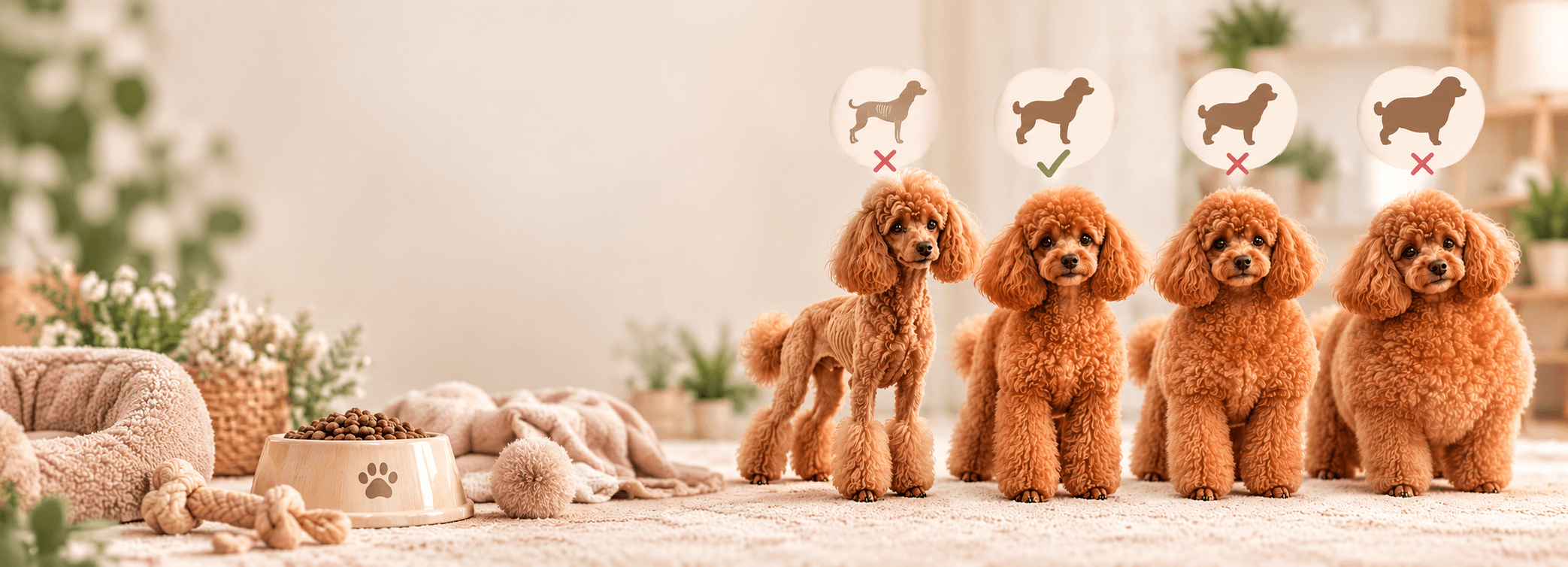
How much should a Poodle weigh? The answer is not as simple as it may seem. Poodles come in four sizes, but even dogs of the same variety can differ in body structure, muscle mass and ideal weight.
That is why the number on the scale is not the only indicator of health. How your dog looks and feels when you gently examine the body is often more informative. Veterinarians use Body Condition Score (BCS) to assess whether a dog is underweight, at an ideal body condition or carrying excess body fat. WSAVA
1 Weight Depends on More Than Size
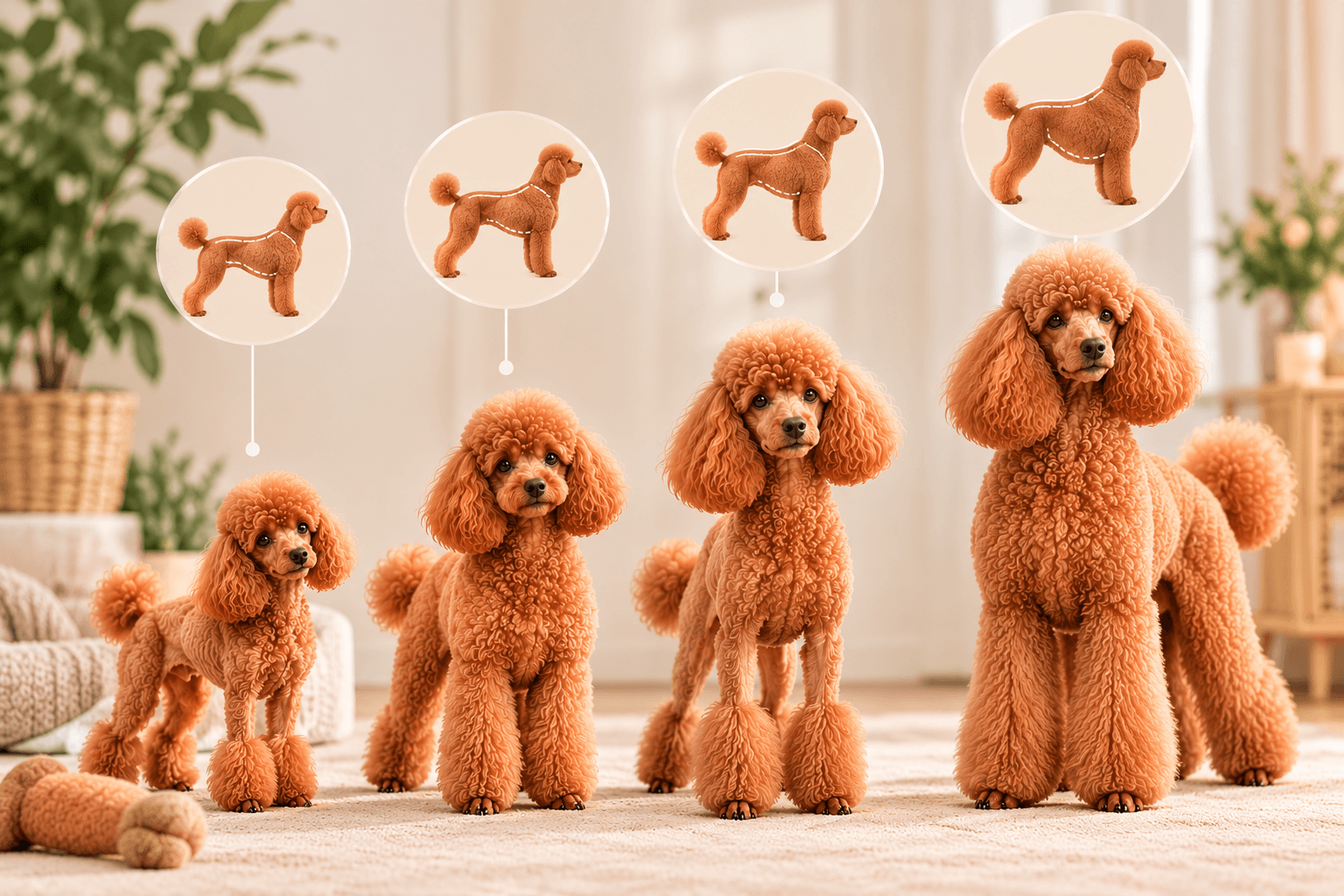
The FCI standard defines the four Poodle varieties by height at the withers, not by body weight:
- Toy: over 24 to 28 cm
- Miniature: over 28 to 35 cm
- Medium: over 35 to 45 cm
- Standard: over 45 to 60 cm, with a +2 cm tolerance
The FCI standard does not give one specific ideal weight for each variety. Two Poodles of the same height can therefore have different, yet equally healthy, body weights.
2 What Does an Ideal Weight Look Like?
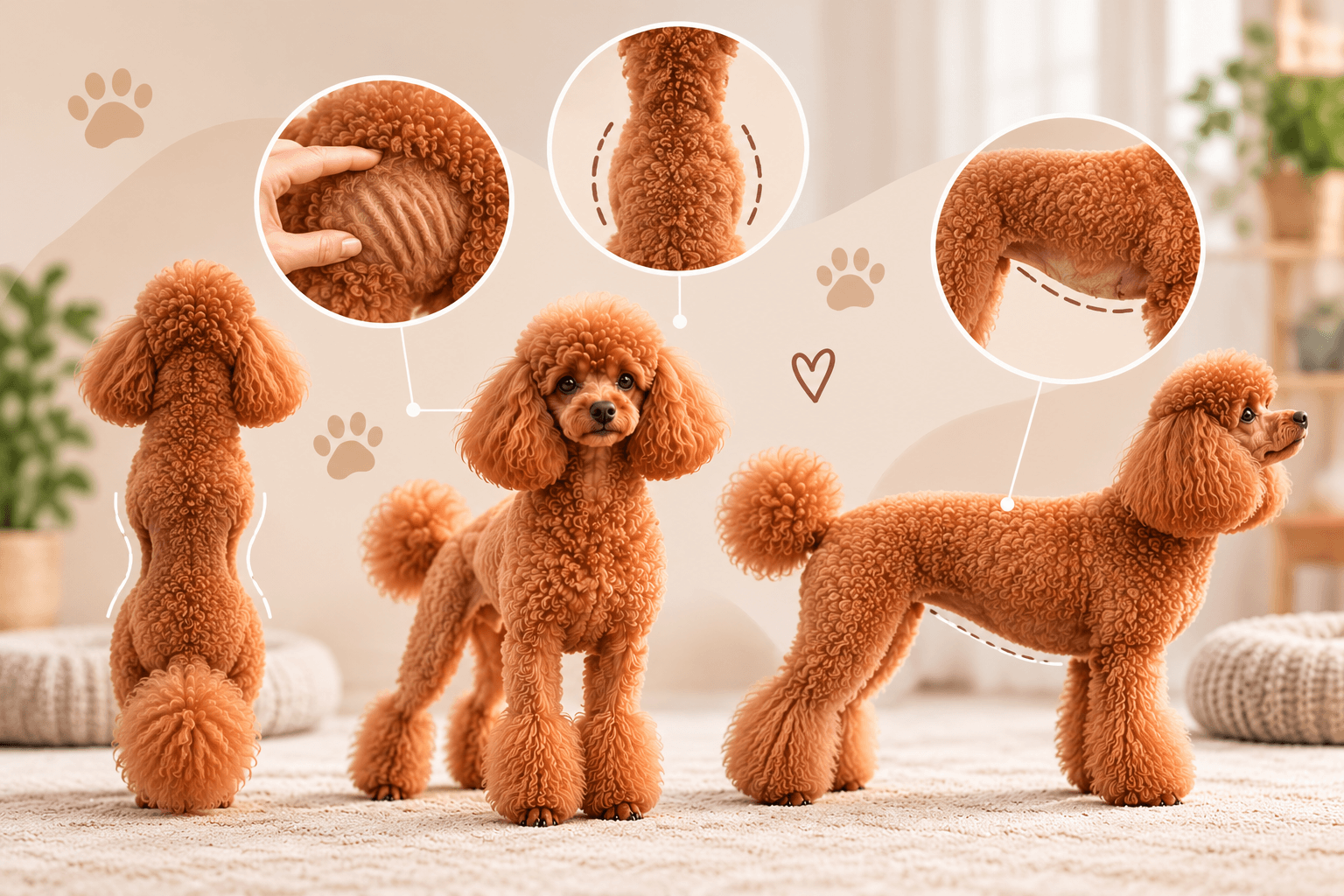
Instead of focusing only on the scale, look at your Poodle's overall body shape.
In a dog with an ideal body condition: Ribs – they should be easy to feel without being covered by excessive fat or visibly protruding. Waist – when viewed from above, there should be a visible narrowing behind the ribs. Abdomen – when viewed from the side, the abdomen should tuck upward toward the hind legs.
3 How to Check Your Poodle at Home
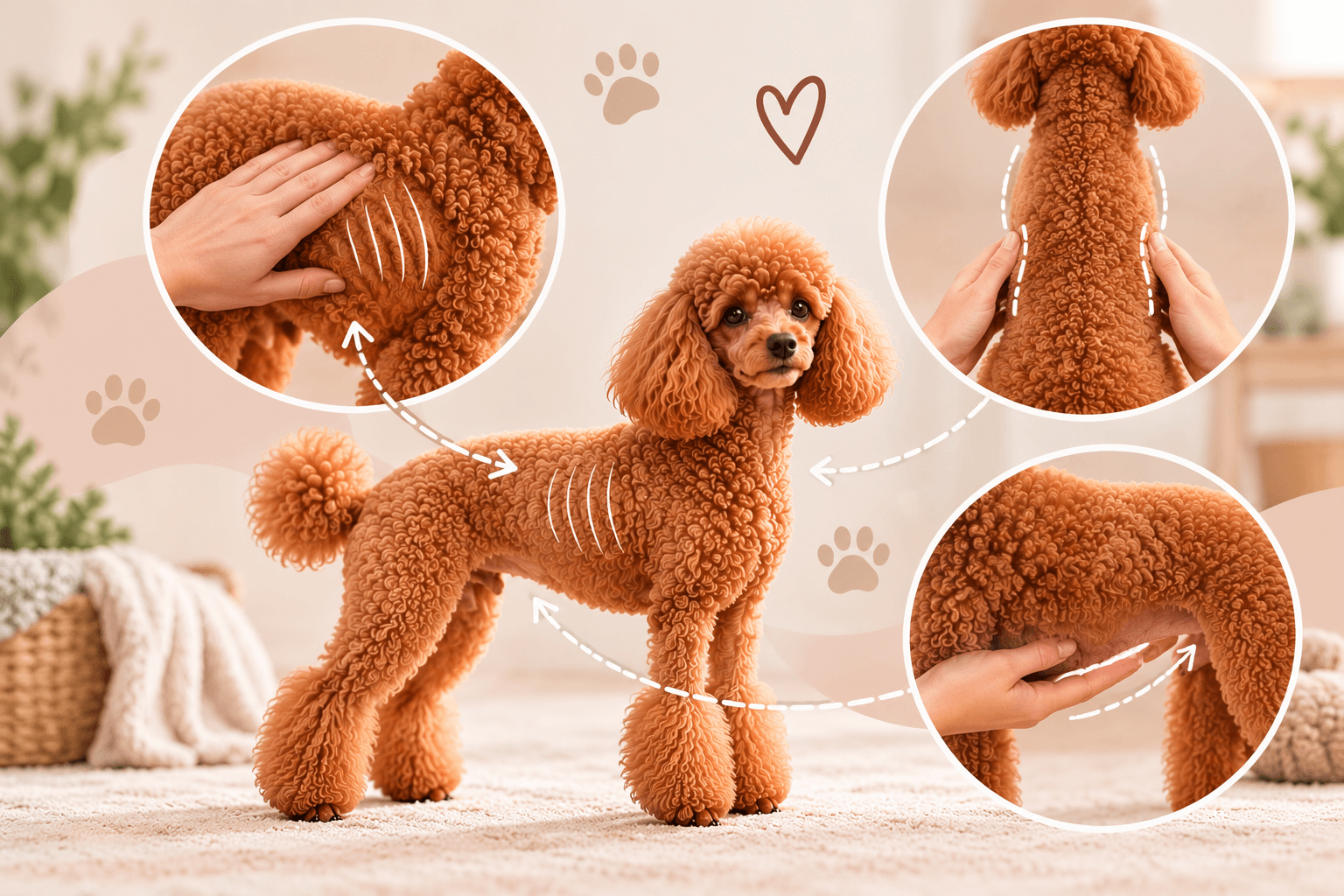
A simple check at home can help you notice changes in your dog's body condition.
Gently run your hands over the ribs. You should be able to feel them without pressing firmly. Then look at your Poodle from above and from the side. Pay attention to the waist and abdominal line.
Checking regularly is useful because gradual weight gain can be difficult to notice from day to day.
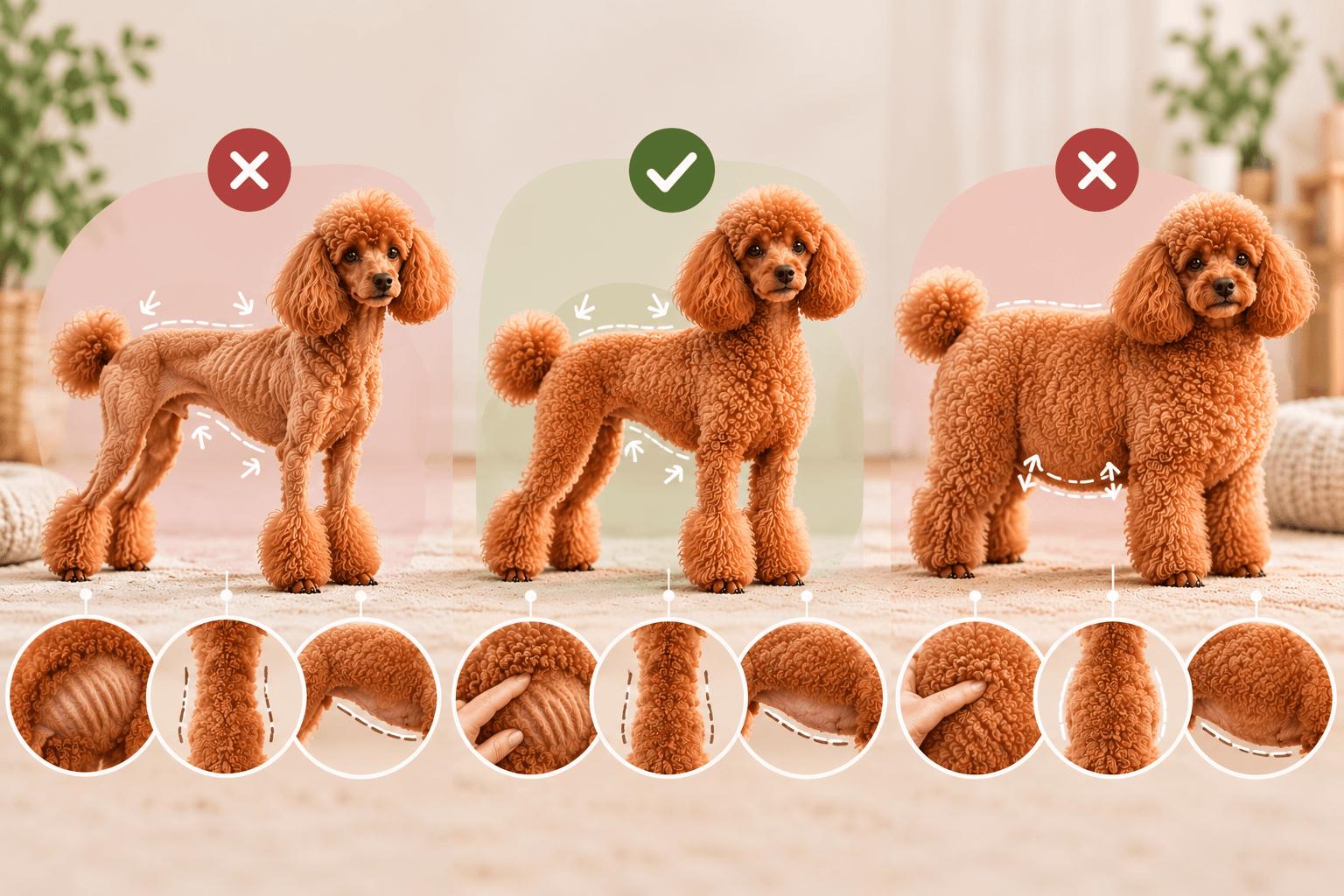
4 Signs Your Poodle May Be Underweight or Overweight
Possible signs of being underweight:
- Ribs or other bony structures are very prominent.
- There is very little fat covering the body.
- The dog appears noticeably thin.
Possible signs of being overweight:
- Ribs are difficult to feel.
- The waist becomes less defined or disappears.
- The abdomen looks more rounded.
- The dog may tire more easily or become less willing to exercise.
If you are unsure, a veterinarian can assess your dog's BCS and determine whether changes to diet or activity are appropriate.
5 Why Maintaining a Healthy Weight Matters
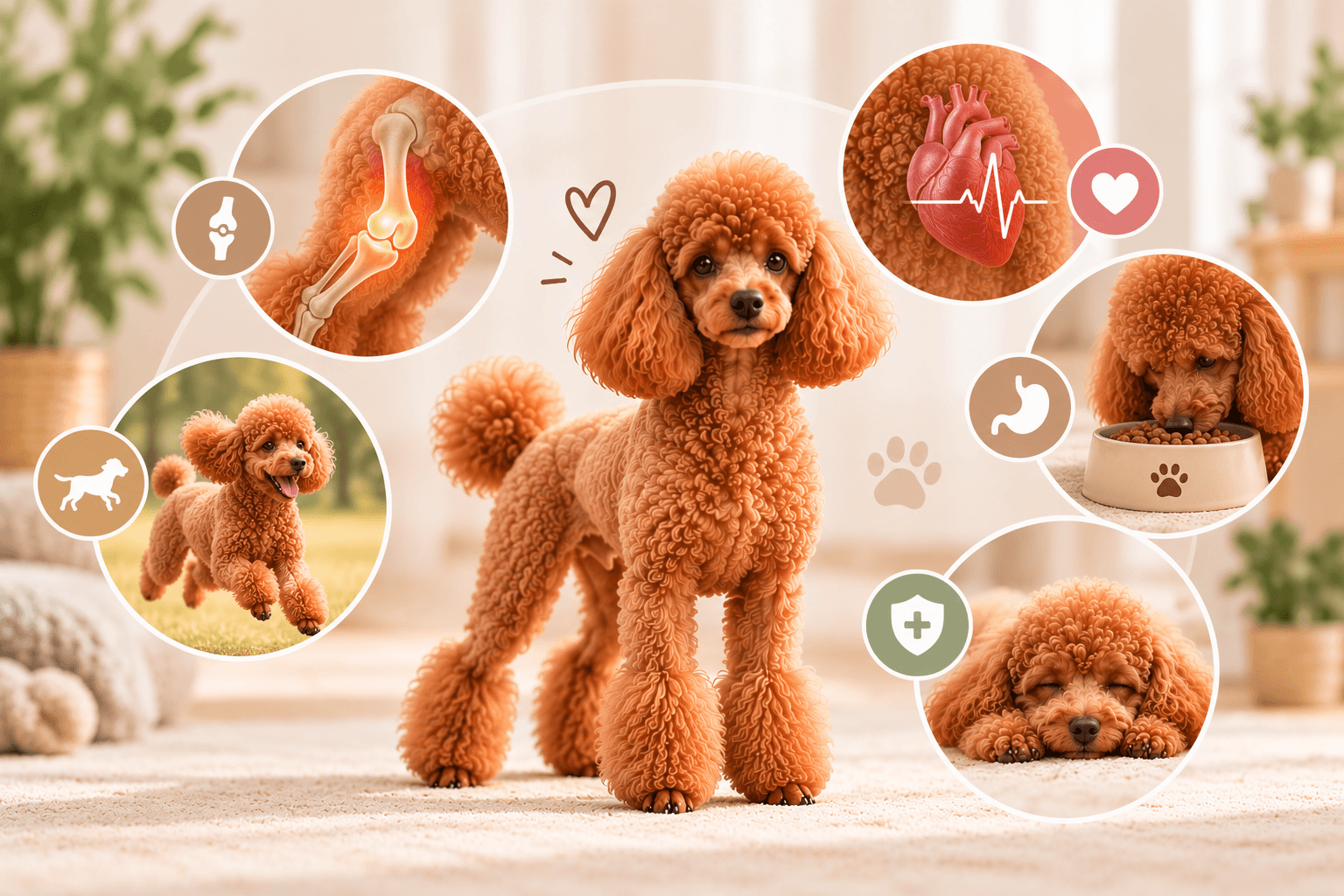
Maintaining a healthy body condition matters throughout a dog's life. Excess body fat can place additional strain on the joints and make movement more difficult, while being underweight may indicate inadequate energy intake or an underlying health problem.
The goal is not to make a Poodle as light as possible, but to keep them at a healthy body condition for their individual build and life stage. Food intake should be adjusted to the individual dog, taking into account activity level, age and health rather than relying only on the feeding table on a food package.

Breeding & Education
Poodle Nutrition: How Much Food Does a Poodle Need?
How much food does a Poodle need? Learn what affects their nutritional needs and how to determine an appropriate portion.

Life With a Poodle
If Poodles Had Jobs
If Poodles had real jobs, they wouldn't exactly be ordinary employees. From running the office to judging your dinner, here are the careers they would probably choose.

Life With a Poodle
Things Only Poodle Owners Understand
Life with a Poodle comes with its own kind of chaos, comedy, intelligence, and unconditional love. Here are some things every Poodle owner will instantly recognize.