
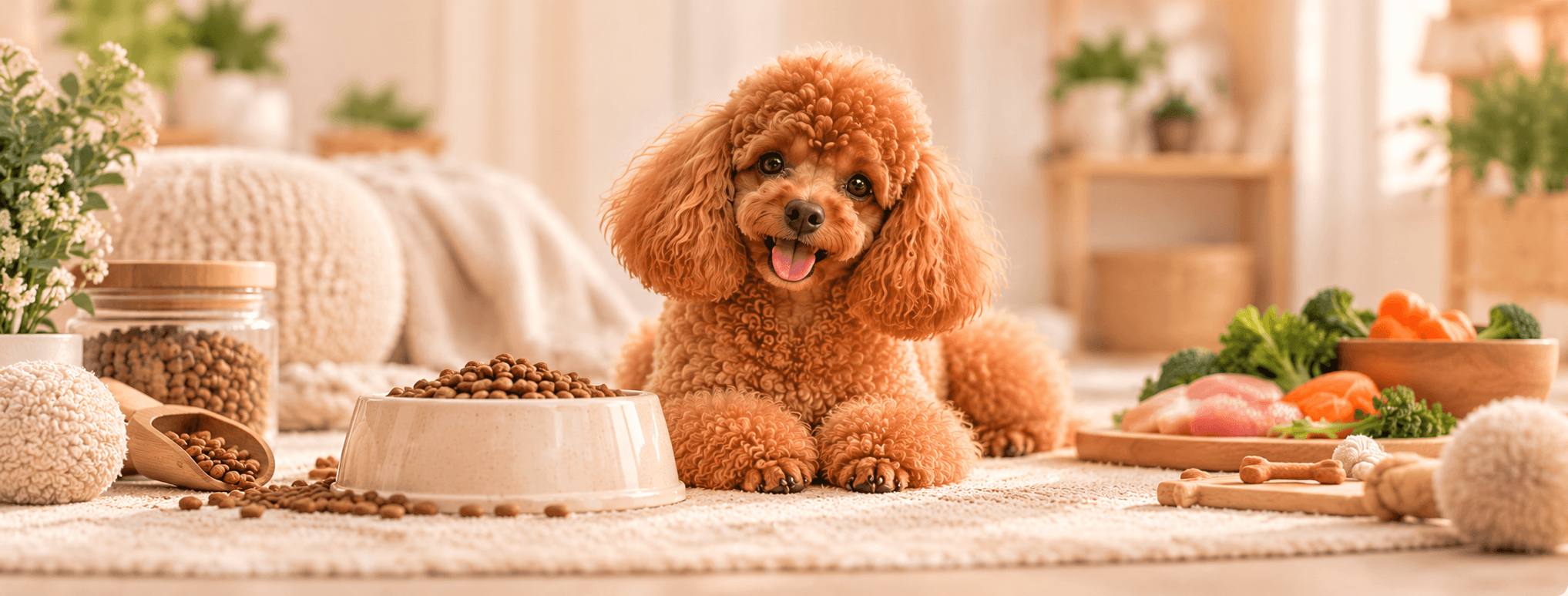
There is no single feeding amount that is right for every Poodle. Nutritional needs depend on age, size, body condition, activity level, metabolism and overall health.
That is why food portions should not be based only on the feeding chart on the package or the dog’s size. One of the best indicators is whether your Poodle maintains a healthy body condition over time.
1 The Amount Depends on the Dog
Two Poodles of the same size may not have exactly the same nutritional needs. A more active dog may use more energy, while an older or less active dog may need less.
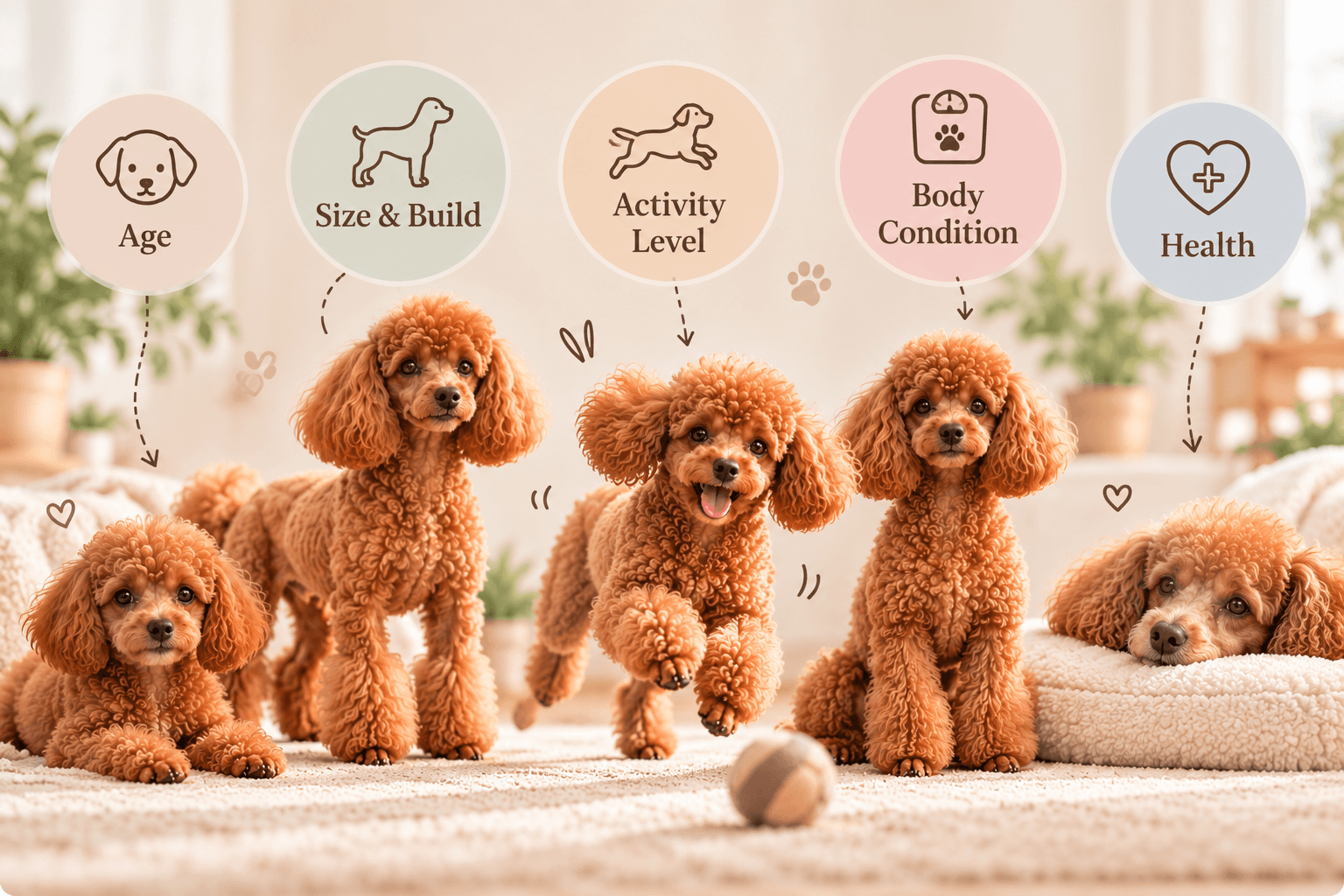
Factors that can affect feeding needs include:
Age – growing puppies have different nutritional needs from adult dogs. Size and build – different Poodle varieties can have different energy requirements. Activity level – highly active dogs generally use more energy. Body condition – portions should support a healthy body condition. Health – certain health conditions can change a dog’s nutritional needs.
2 Food Guidelines Are a Starting Point
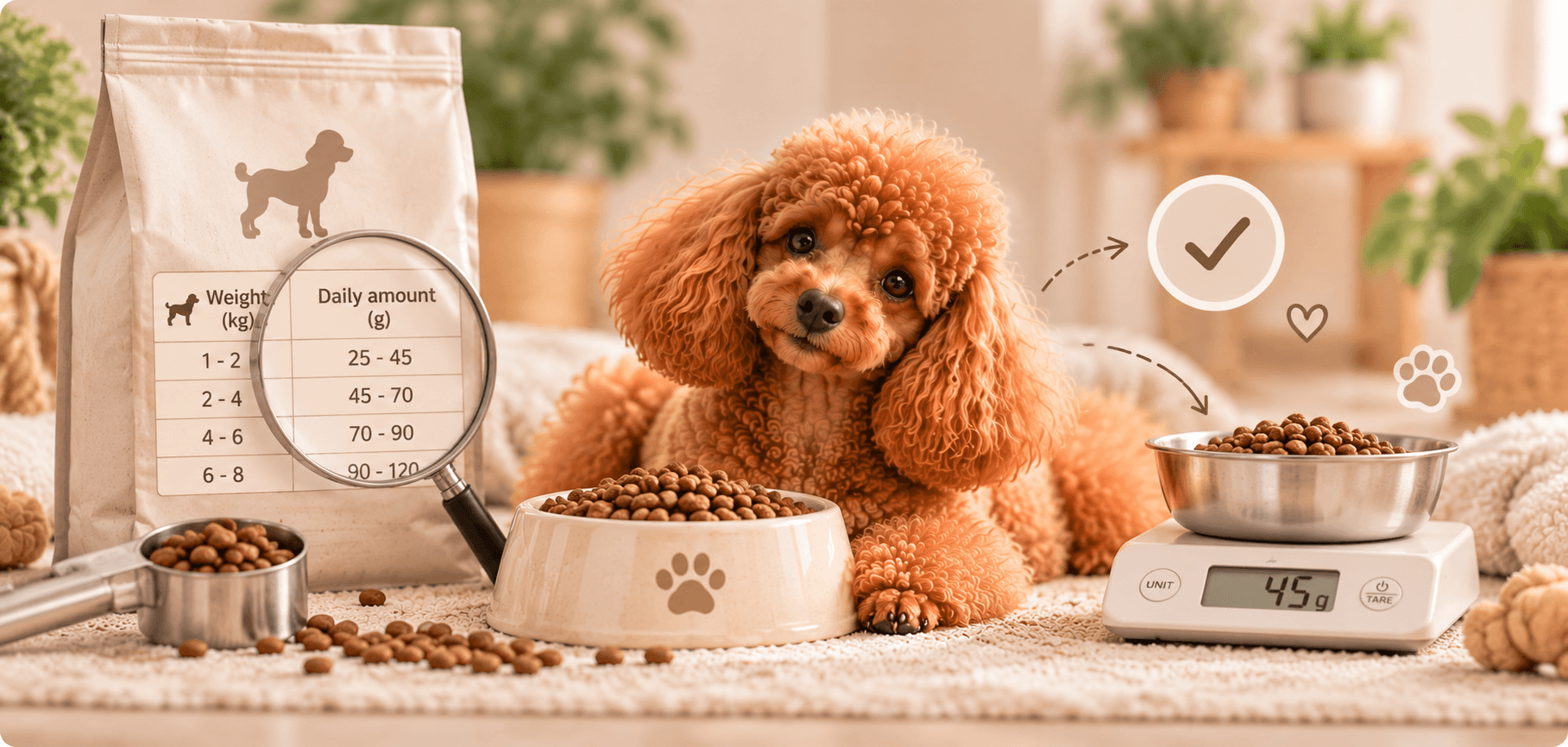
Most commercial dog foods provide feeding recommendations. These are useful as a starting point, but they are not a perfect portion for every dog.
If your Poodle is gaining or losing weight, the amount of food may need to be reassessed. Regularly monitoring body weight and body condition helps you adjust portions to your dog’s actual needs.
For small dogs, measuring food accurately with a kitchen scale can be more precise than estimating portions by eye.
3 Puppies Have Different Nutritional Needs
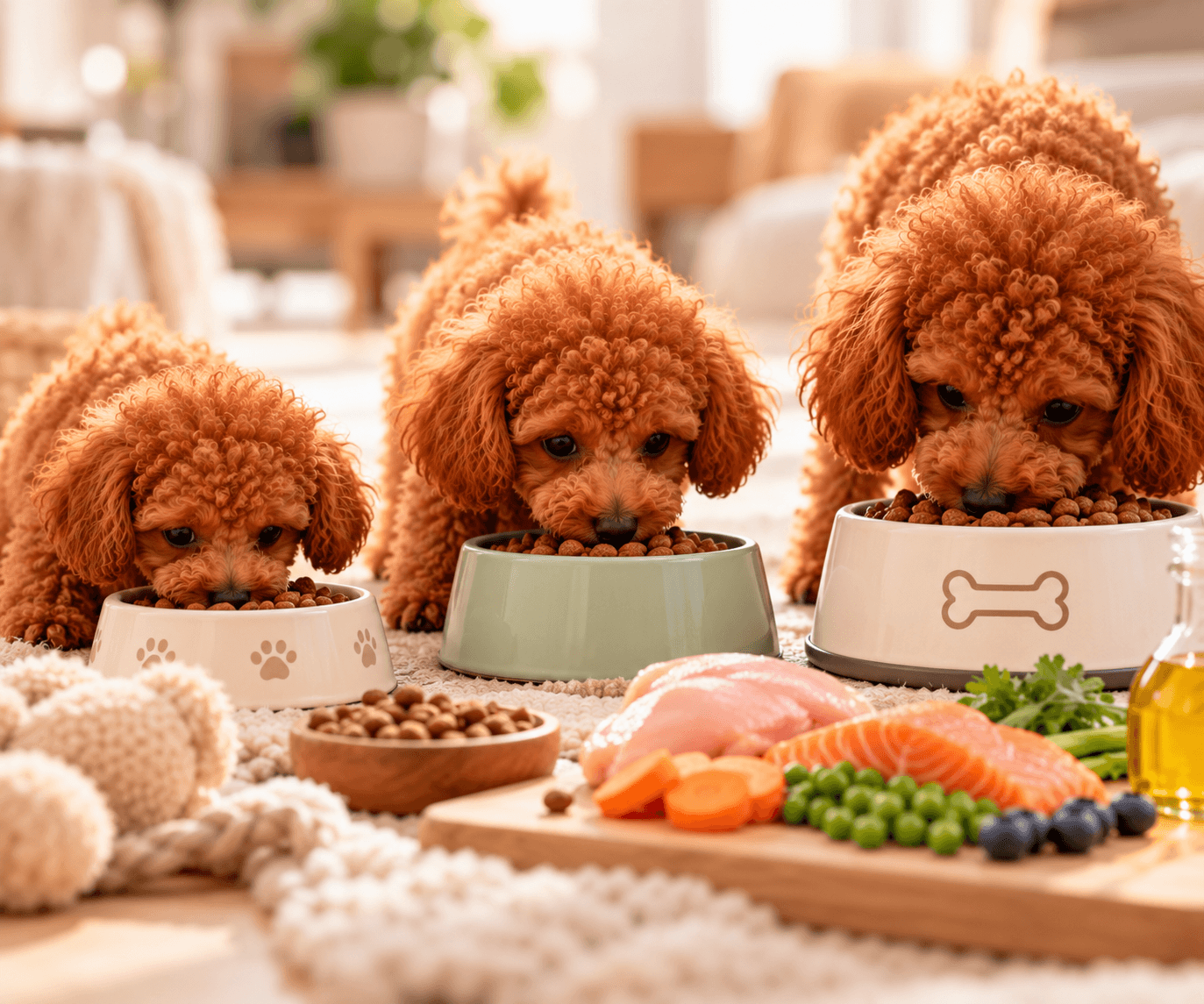
A Poodle puppy is not simply a smaller adult Poodle. During growth, puppies need energy and nutrients that support the development of bones, muscles and the rest of the body.
For this reason, puppies should receive a complete and balanced diet appropriate for growth, with the amount adjusted according to age, size and body condition.
As a puppy grows and reaches adulthood, its energy needs change.
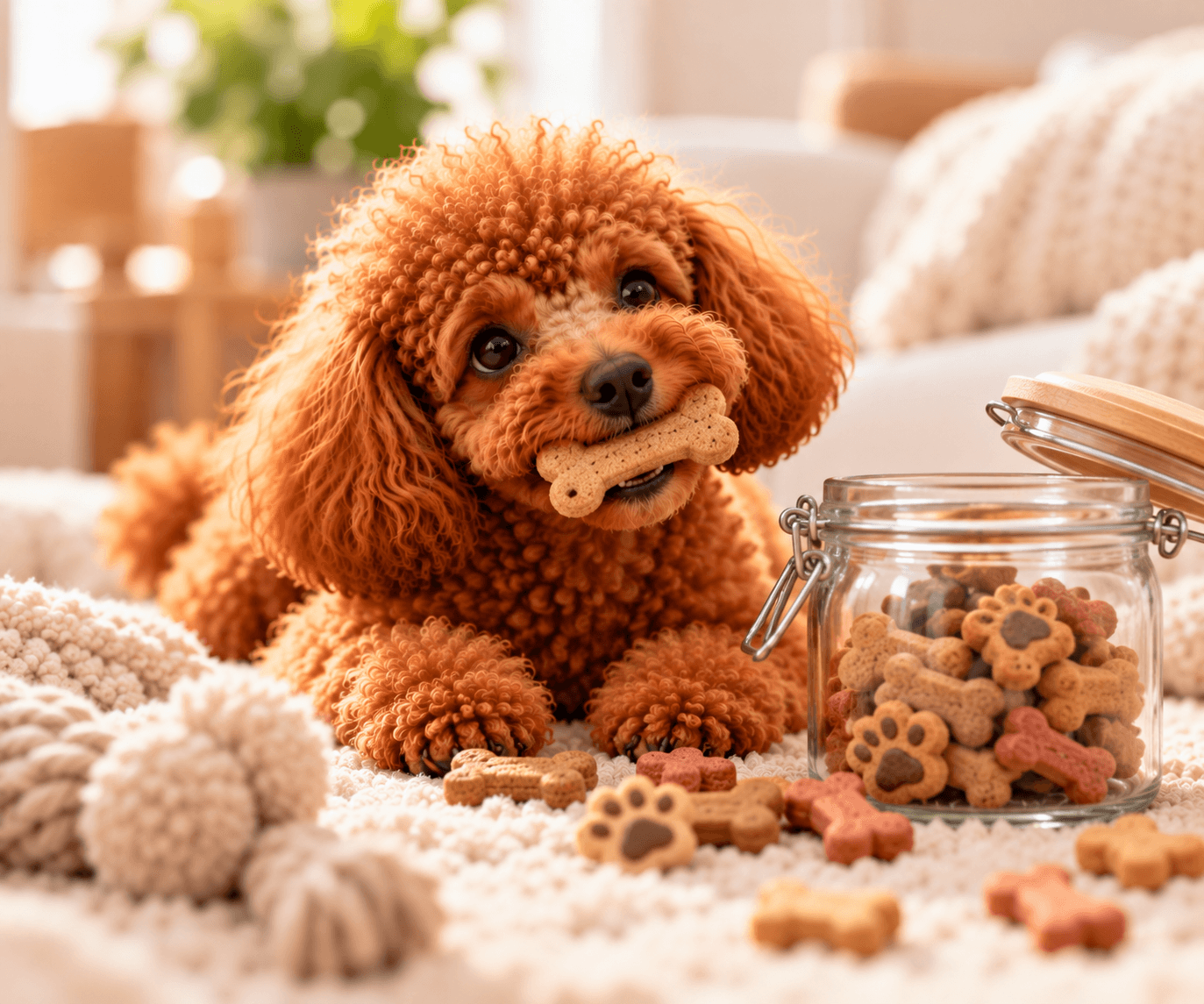
4 Don’t Forget the Treats
When considering how much your Poodle eats each day, remember that meals are not the only source of calories. Treats, snacks and other extras also contribute to the total daily intake.
A commonly recommended guideline is to keep treats to around 10% of the daily calorie intake.
If treats are given frequently, they should be considered as part of the dog’s overall daily nutrition.
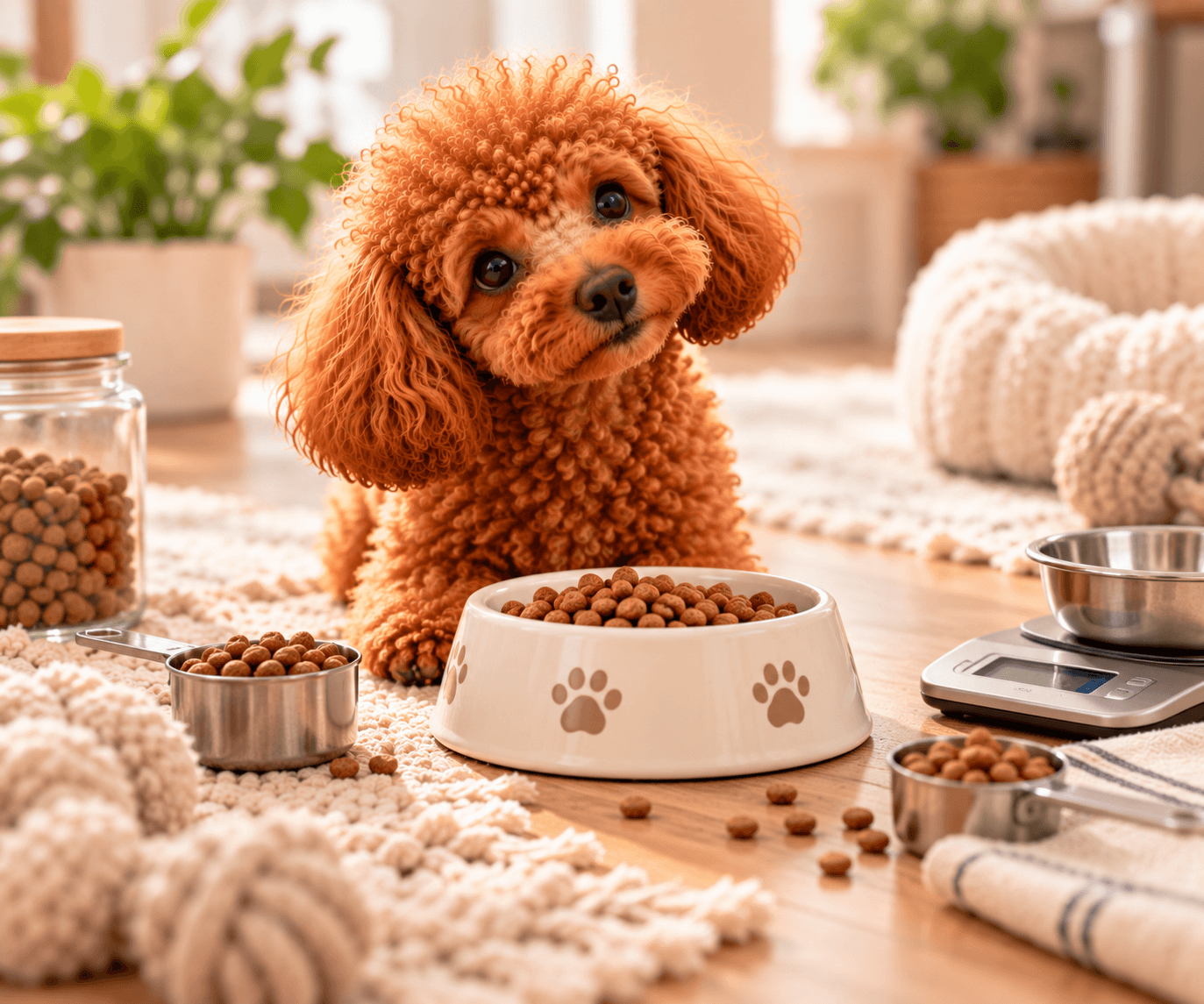
5 How Do You Know If the Portion Is Right?
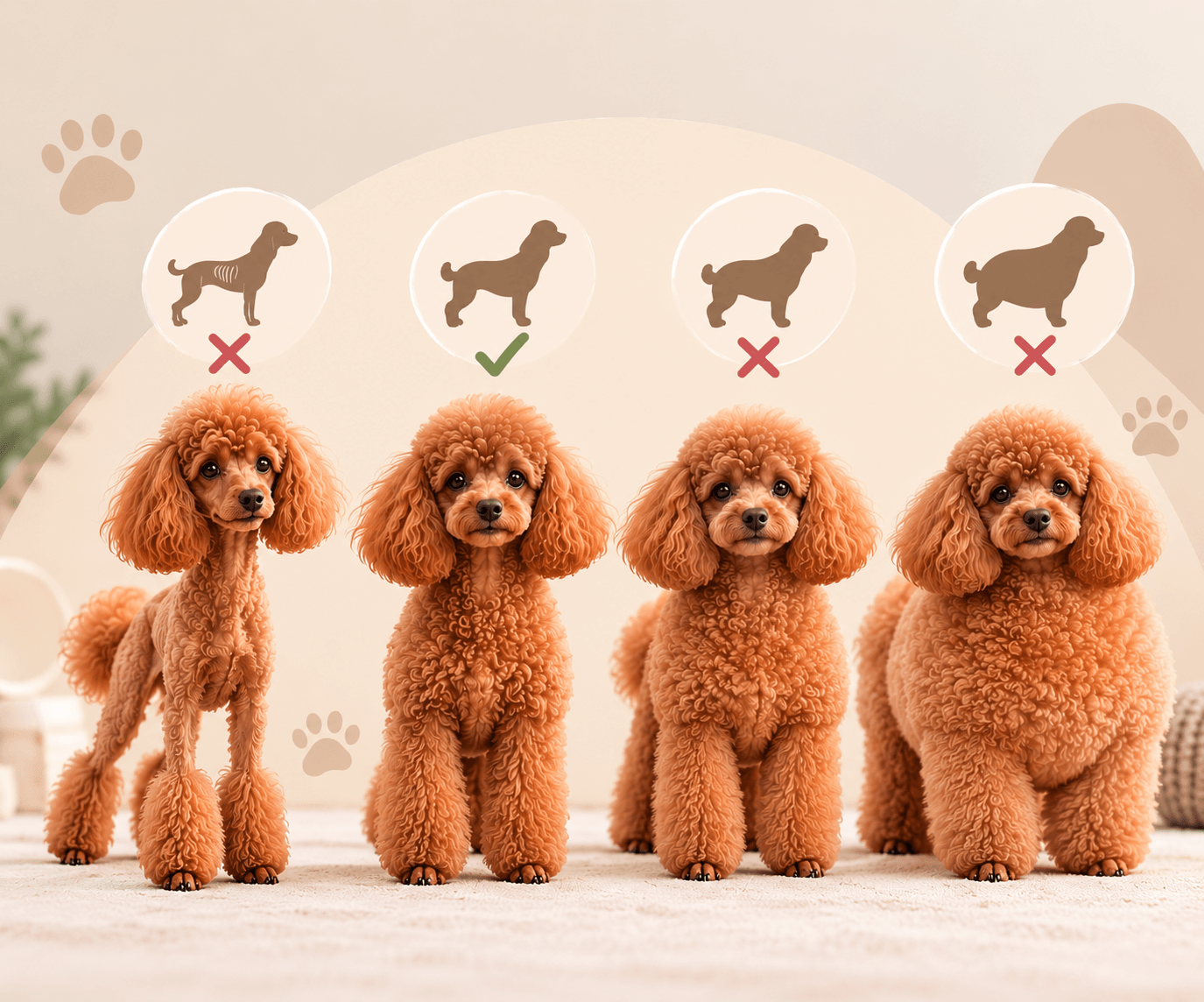
The most important thing is to monitor your dog, not just the number on the scale.
A Poodle in ideal body condition should have ribs that are easily felt without excess fat, a visible waist when viewed from above, and an abdominal tuck when viewed from the side.
If body weight or body condition gradually changes, the amount of food may need to be adjusted. If you are unsure whether your dog is at a healthy weight, your veterinarian can assess their Body Condition Score and provide an individual feeding recommendation.
Breeding & Education
Poodle Weight Guide
Learn how to tell if your Poodle is at a healthy weight and why body condition matters more than the number on the scale.

Life With a Poodle
If Poodles Had Jobs
If Poodles had real jobs, they wouldn't exactly be ordinary employees. From running the office to judging your dinner, here are the careers they would probably choose.
Life With a Poodle
Things Only Poodle Owners Understand
Life with a Poodle comes with its own kind of chaos, comedy, intelligence, and unconditional love. Here are some things every Poodle owner will instantly recognize.